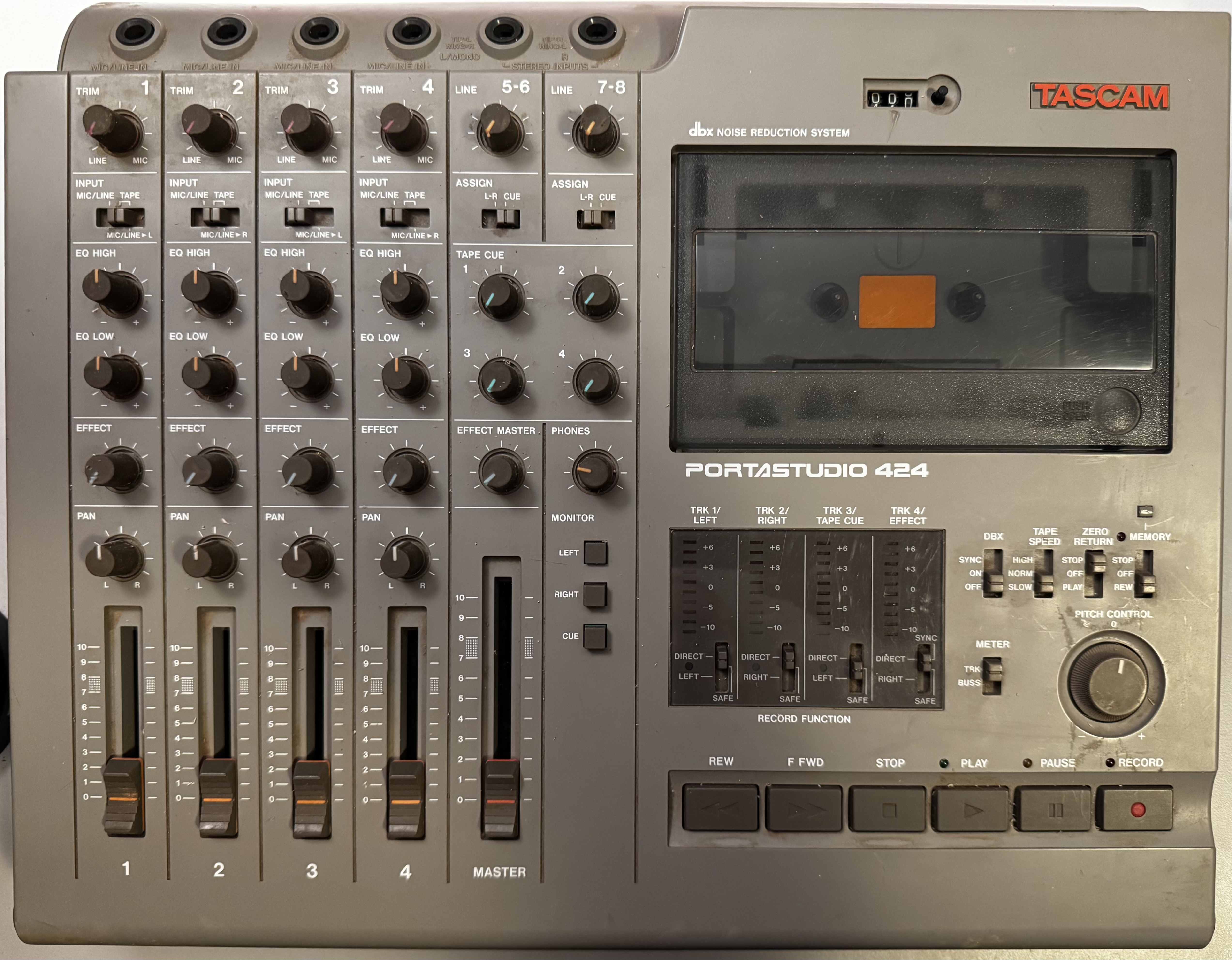
I recently looked back at my approach to songwriting over the years and realized how much the medium defines the process. My journey began with the cassette 4-track. It was revolutionary that a relatively affordable device allowed musicians to record genuine demos. I remember recording my band Packet first demo on a Tascam 424 MK1 in a dingy basement—a rite of passage for many.
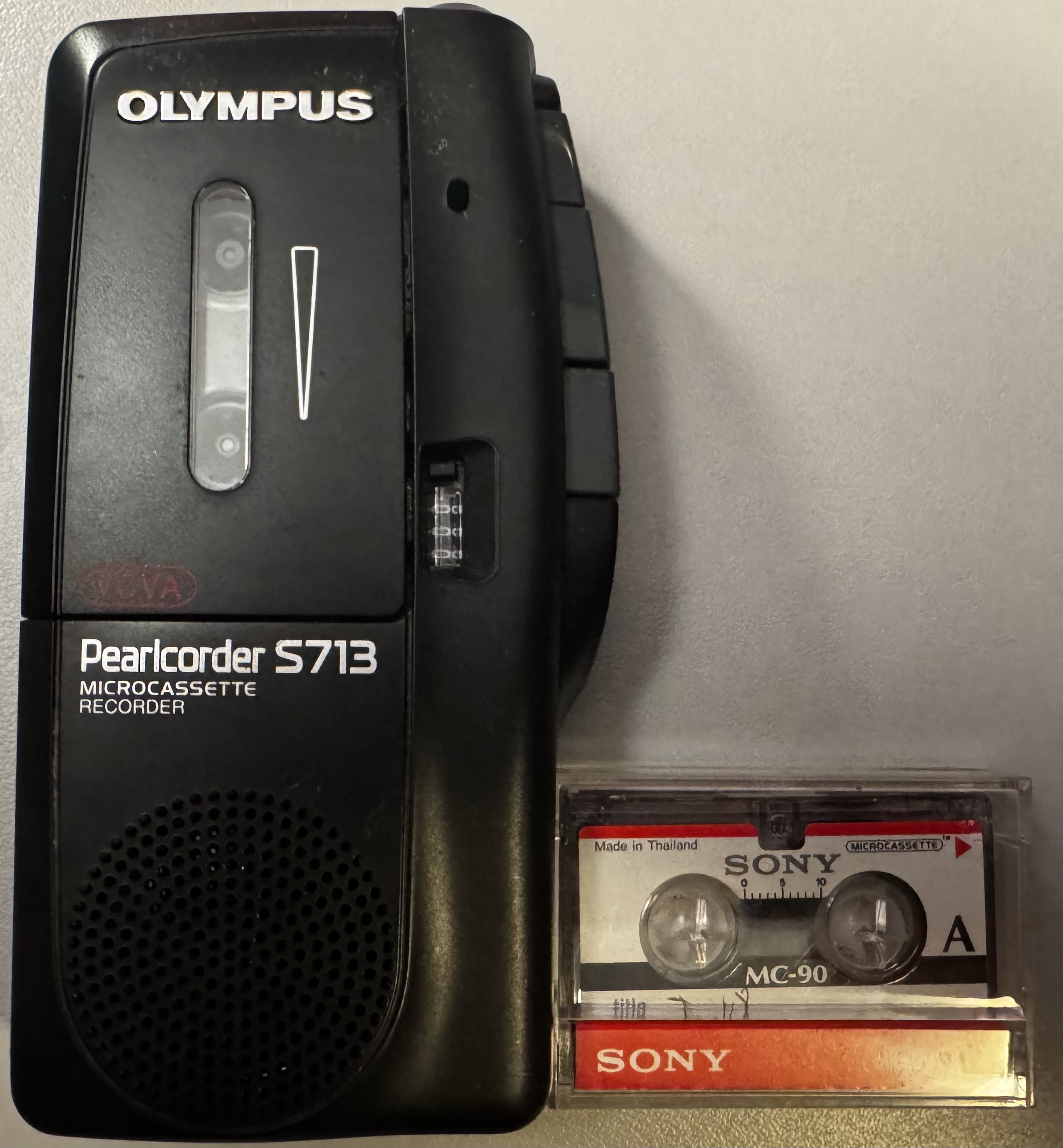
Songwriting is always about that first spark: the initial riff or melody that inspires a full song. To capture those ideas on the fly with an acoustic or unplugged electric guitar, I used a mini cassette recorder. I likely have hundreds of those tapes in storage now; one day, I’ll go back and see which ideas are worth bringing back to life.
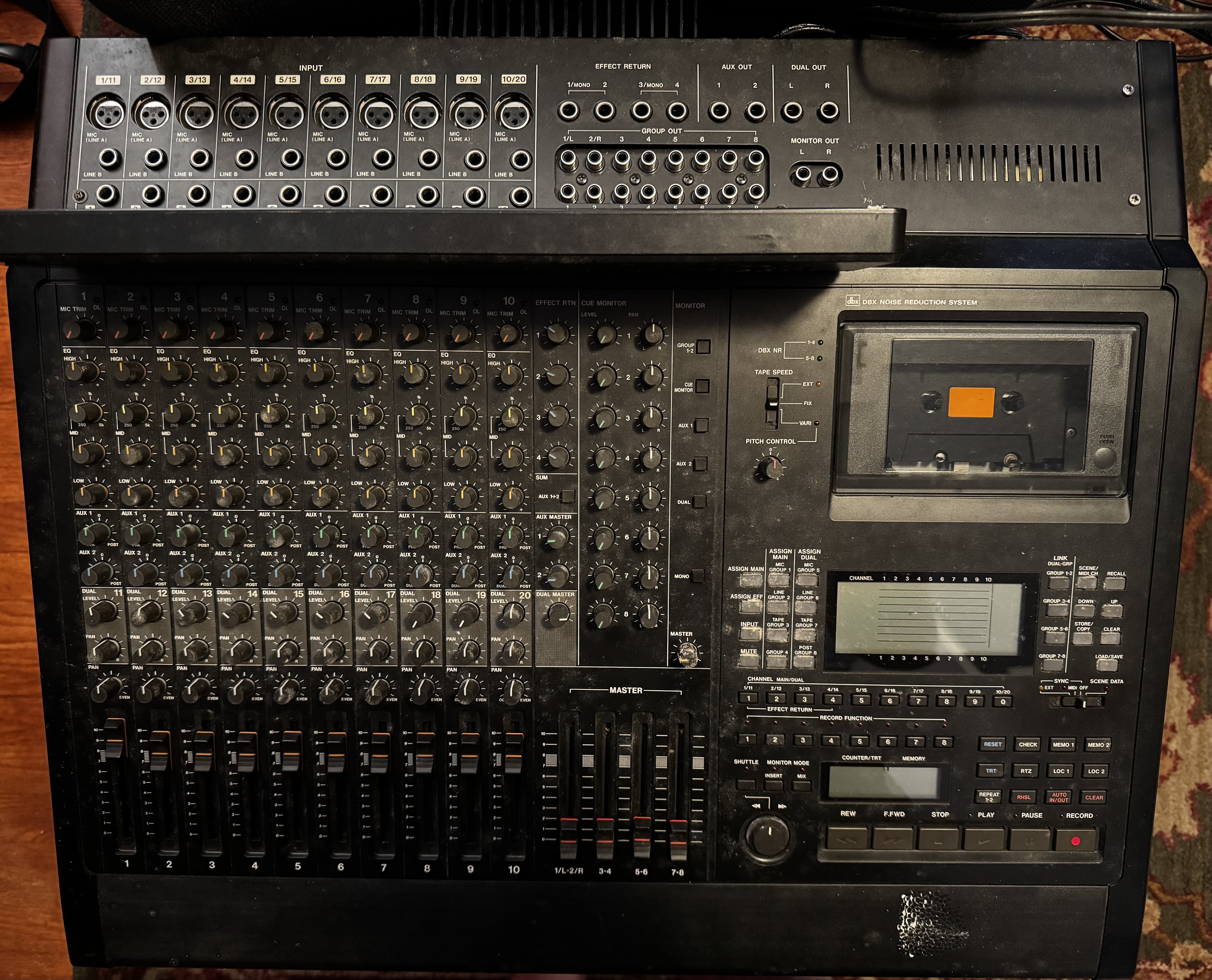
When I started my solo project, Overtone, I saved up for a used Tascam 688 Midistudio. I absolutely loved that unit. I recorded my first two albums on it, and I still cherish the warm, lo-fi grit it captured. In fact, I plan on incorporating it into my modern DAW setup soon to bring some of that analog sound back into the box.
The Modern Blueprint: Arrangement in the DAW
Fast forward to today, and DAWs are my primary canvas. For the initial spark, I’ve traded the mini cassette for Apple’s Voice Memos—it’s simple, convenient, and just works. Once a riff is captured, I re-record it in my DAW and begin the arrangement process.
An arrangement is the "structural blueprint" of a song. It dictates how energy flows, prevents listener fatigue, and ensures every instrument has the space to breathe without clashing. Even a brilliant melody can fall flat if the pacing is predictable or the sonic landscape is cluttered.
Modern DAWs have evolved far beyond simple "tape recorders" to become powerful structural architects. One of the most vital features across these platforms is the Arranger Track, which allows you to label sections (Verse, Chorus, Bridge) and move entire blocks of the song instantly. If you want to see if a song works better starting with the chorus, you simply drag the section.
Comparing Arrangement Philosophies
Different DAWs approach the "canvas" of song arrangement with unique philosophies:
1. Logic Pro: The "Smart" Arranger
Logic is designed for a fast, creative workflow, offering tools that help "write" the arrangement for you when you hit a creative block.
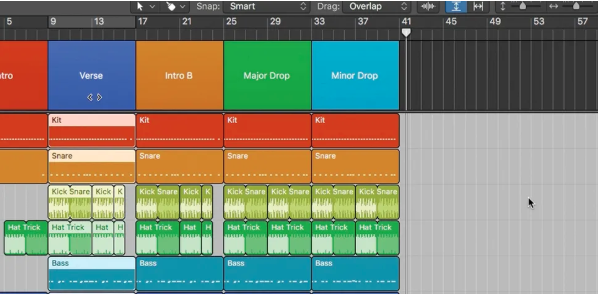
- Global Arrangement Track: You can create labeled blocks at the top of the timeline. Moving a block automatically moves every piece of MIDI and audio beneath it, allowing you to "remix" your structure in seconds.
- Live Loops: This allows you to sketch out cell-based ideas in a grid—similar to Ableton Live—before "performing" them into the linear timeline.
2. Reason: Building Songs With Blocks
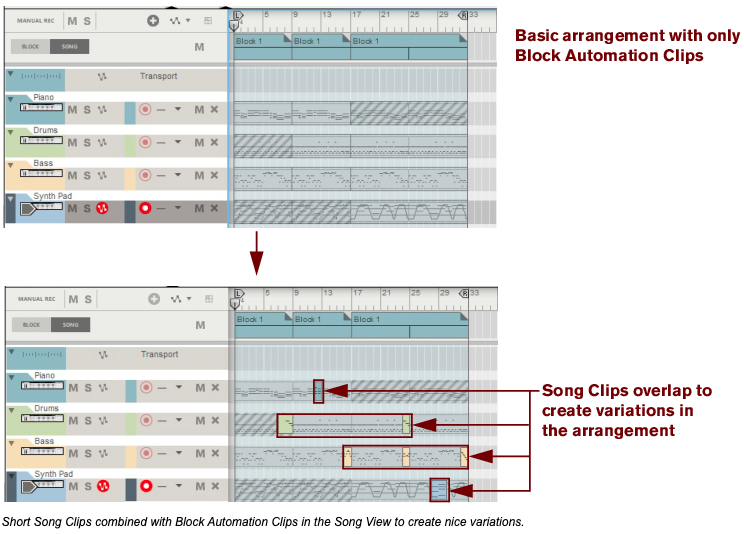
In Reason, Blocks Mode is where you design the song’s architecture. Think of a "Block" as a sub-arrangement (usually 4–8 bars). Instead of copying and pasting individual clips, you build a "Verse" once and "paint" it across your timeline.
- The Blueprint System: You switch between Song View (linear) and Block View. In Block View, you refine the core parts of a section.
- Non-Destructive Global Edits: If you change a snare rhythm in your "Chorus" block, every instance of that chorus in the song updates instantly.
- The "Hybrid" Workflow: You aren't locked into the block. You can record "Song-level" data, like a vocal take or guitar solo, directly over the blocks in the main timeline.
3. Reaper: The Power User’s Sandbox
Reaper doesn’t force a specific workflow; it gives you the tools to build your own.
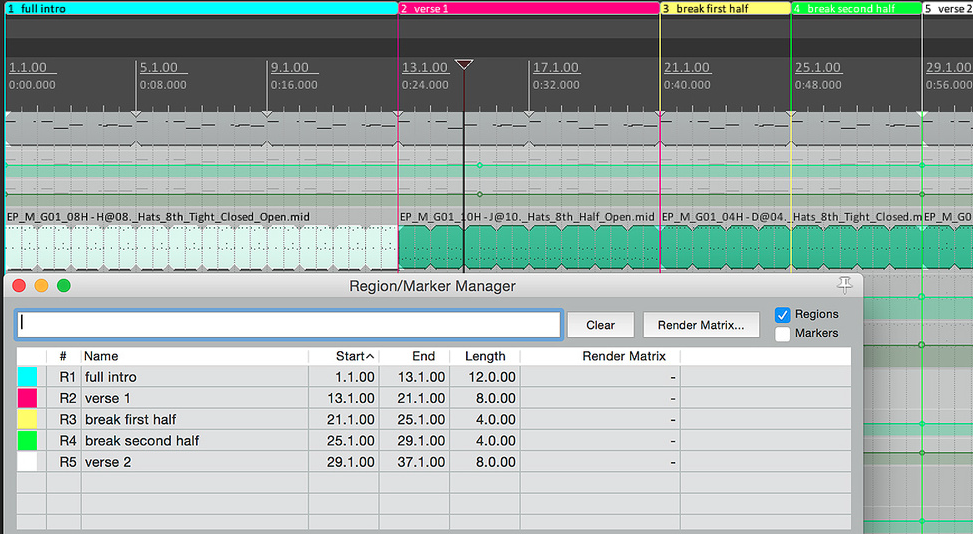
- Region Playlist/Manager: Similar to Logic’s arrangement track, but with a "Region Playlist" that lets you audition different song structures without actually moving items on the timeline.
- Folder States: Reaper features a highly flexible folder system. You can nest tracks infinitely, treating an entire "Drum Group" as a single track for high-level arrangement edits.
- The "Action" List: You can script custom macros—such as a single button that cuts 4 bars from all tracks, ripples the timeline, and inserts a marker—saving massive amounts of time during structural edits.
A song is more than just a well-structured arrangement; it is a living time capsule. Each track we lay down, whether it was captured through the hiss of a Tascam 4-track in a basement or the pristine clarity of a modern DAW, is a picture of who we were in that moment.
When we listen back to an old riff or demo, we are transported back to the room we were in, the deep sadness or joy of that year, and the "first spark" that felt like magic. Our gear may evolve over time, but the heart of the process remains the same: we are preserving fleeting memories, turning them into something we can revisit, refine, and share forever.